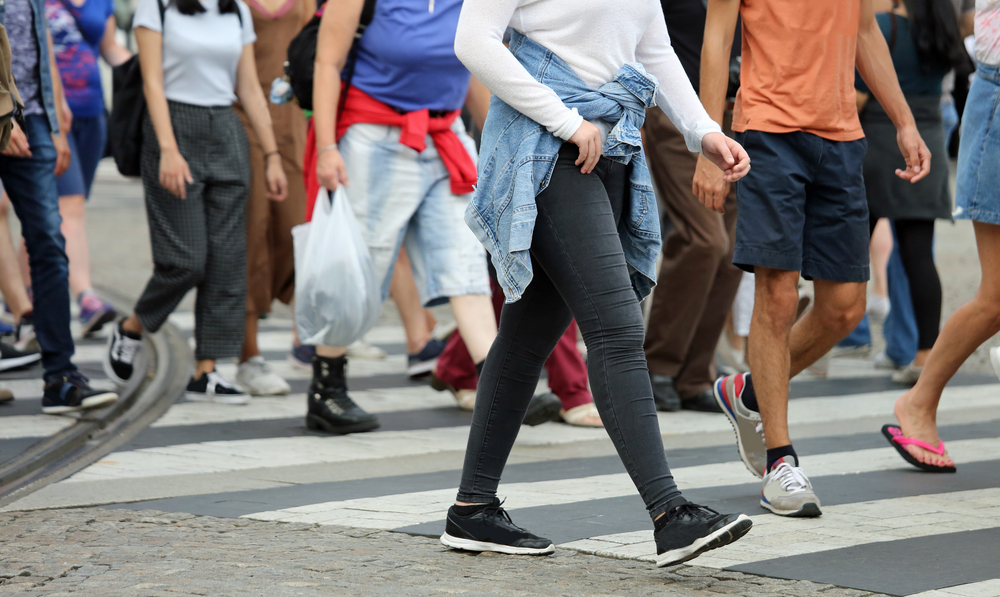
Being struck by a vehicle is a traumatic, stressful experience that can leave you with serious injuries and property damage. If that ever happens, a qualified pedestrian accident lawyer in California can help you seek compensation for your damages—physical, psychological, and material.
Walking around Los Angeles and other major cities in California can be especially dangerous. The high volume of vehicles and urban hazards makes pedestrian accidents more common than many people realize. Don’t suffer physical and financial hardship because of someone else’s negligence or recklessness.
Call (866) 359-0807 to schedule a free consultation. We’ll evaluate your case in just a few minutes. If you qualify, we’ll assign you an experienced pedestrian accident lawyer who will use their skills, experience, and resources to build a strong legal strategy and fight for the maximum compensation you deserve.
What Most Pedestrian Accident Lawyers Won’t Tell You (But You Should Know)
Not everything about pedestrian accidents is as obvious as it seems—and not every pedestrian accident lawyer in California explains the full picture unless you know what to ask. Here are key facts many lawyers don’t tell you upfront—but that can seriously affect your case and your compensation.
Low-Speed Accidents Can Still Cause Serious Harm
What most lawyers won’t tell you: You don’t need to be hit by a speeding car to suffer life-changing injuries.
What you should know: Many severe pedestrian injuries happen at low speeds—especially in parking lots, driveways, or residential zones. Dragging or run-over accidents often occur when vehicles are barely moving but can still result in broken bones, head trauma, or spinal injuries.
You Can Have a Case—Even If the Car Didn’t Hit You
What most lawyers may not explain: Physical contact with the vehicle isn’t required to file a claim.
What you should know: If a reckless driver caused you to trip, fall, or jump out of the way and you were injured in the process, a pedestrian accident lawyer can still pursue compensation on your behalf. It’s about proving the driver’s negligence—not whether you were directly struck.
Crosswalks Don’t Guarantee Safety
What many attorneys assume you know: Drivers are supposed to stop for pedestrians at green lights—but that doesn’t always happen.
What you should know: Even when you have the right of way, distracted or aggressive drivers may fail to yield. Unfortunately, this is a common scenario in places like Los Angeles, where pedestrian traffic is high and drivers are often in a rush. A green light doesn’t guarantee they’re paying attention.
Hiring a Lawyer Doesn’t Require Upfront Payment
What most people don’t hear until too late: Legal help is more accessible than you think.
What you should know: Most pedestrian accident attorneys work on a contingency fee basis. That means you pay nothing upfront—and your lawyer only gets paid if you win your case. If you don’t receive compensation, you owe nothing for legal fees.
You Don’t Have Unlimited Time to File a Claim
What gets overlooked too often: Unfortunately, time is not on your side.
What you should know: In California, the statute of limitations for pedestrian accident claims is two years from the date of the incident. If you wait too long, you may lose your right to compensation—no matter how strong your case is. The sooner you speak to a pedestrian accident lawyer in California, the better.
Do I Need a Pedestrian Accident Attorney? Why
We’ll be very honest with you: you’re not legally required to hire one. But hiring a pedestrian accident attorney can make a huge difference when you’re seeking compensation after an accident.
Unless you’re an attorney yourself, it can be extremely difficult—if not impossible—for a self-represented pedestrian to recover fair compensation. Even though pedestrians are often considered the victims in traffic accidents, you can still be found partially or fully liable, depending on the circumstances. And many types of damages—especially non-economic ones like emotional distress or future medical expenses—are commonly overlooked by untrained individuals.
Insurance companies know this. And they’ll use it—along with many other tactics—to minimize or even deny your claim entirely.
Here’s how hiring a skilled pedestrian accident attorney can help you:
- Determine liability and prove fault in a way that holds up to legal scrutiny.
- Increase your total compensation by properly identifying and valuing all types of damages, including hidden or long-term injuries.
- Stand up to insurance companies and their attorneys during negotiations or litigation.
- Save you time and reduce stress by gathering evidence, meeting legal deadlines, and completing all required paperwork correctly.
- Provide experienced legal guidance to help you avoid mistakes that could weaken your case.
- Take your case to court if the insurance company makes a lowball or unfair offer.
Find a Pedestrian Accident Attorney Near Me in California
If you or a loved one has already suffered an accident in California and are seeking compensation, you might be wondering, “Where can I find the best pedestrian accident attorney?” Megeredchian Law has office locations throughout California. Our headquarters are located at:
350 N Glenoaks Blvd 3rd floor, Burbank, CA 91501
Some other locations we serve include:
If your city isn’t listed, don’t worry! Visit our locations page to find a pedestrian accident attorney near you, or call (866) 359-0807—we’re available 24/7 to connect you with a qualified California pedestrian accident attorney.
All You Need to Know About Pedestrian Accident Claims
Pedestrian accident claims involve several important steps that must be taken into consideration. A skilled pedestrian accident attorney knows how to handle a pedestrian accident claim and can guide you through each stage of the process—from your initial consultation to collecting your settlement check.
Learn how to claim for pedestrian accident step by step here:
How Long Does it Take to Settle a Pedestrian Accident?
Depending on your situation, resolving a pedestrian accident claim in California can take a few months—or stretch into years. Here’s how it typically unfolds and what influences the timeline.
Typical Timeline by Case Type
- Simple cases (clear liability; minor injuries): 6 to 12 months after medical treatment concludes.
- Complex cases (serious injuries, surgery required): 12 to 16 months post-treatment
- Very minor injuries (e.g., bruises or small fractures): Possibly 3 to 6 months.
- Severe or disputed cases may extend into 12–24 months or more.
- Some litigation-heavy cases may take up to 2 years or longer.
Factors That Can Shorten or Lengthen the Timeline
- Injury Severity & Medical Recovery
Faster settlements occur when injuries are minor. Claims often wait until Maximum Medical Improvement (MMI) is achieved. - Clarity of Liability
Clear-cut cases settle more quickly. Disputed fault or shared responsibility (California’s comparative negligence rule) can delay negotiations. - Insurance Company Behavior and Legal Requirements
Under California regulations, insurers must respond to claims within 40 days and settle within 85 days if liability and damages are clear. Slow or uncooperative insurers prolong cases. - Evidence and Documentation Gathering
Cases with readily available evidence (medical records, accident reports, witness statements) move faster.
- Early Legal Representation
Working with a pedestrian accident attorney can expedite evidence collection, handle negotiations efficiently, and prevent delays. - Litigation vs. Settlement
Most cases settle out of court. If litigation is necessary, expect a longer process involving discovery, motions, mediation, and possibly trial. - Court Backlogs
Filing a lawsuit introduces delays due to court schedules and procedural timelines.
Approximate Timeframes for Each Step of a Pedestrian Accident Claim
- Initial Consultation & Evidence Collection – 1 to 2 months
- Medical Treatment & Recovery (to Maximum Medical Improvement) – 3 to 12 months (depending on injury severity)
- Demand Letter & Negotiation – 1 to 3 months
- Settlement Processing & Disbursement – A few weeks to a few months after agreement
- Filing Lawsuit (if needed) – Days to weeks
- Discovery & Pre-trial Negotiations – Several months
- Mediation or Trial (if unresolved) – Several months to over a year
- Post-Settlement or Verdict Disbursement – Around 30 days, unless there is an appeal
How Much Compensation Can You Obtain for a Pedestrian Accident?
If you’ve been hit by a car as a pedestrian in California, you’re probably wondering how much compensation you can expect. The truth is, every case is different, and there is no fixed formula for calculating a settlement. However, the severity of your injuries plays a major role in how much you can recover.
For minor injuries, settlements often range from $10,000 to $75,000. These cases may involve sprains, bruises, minor fractures, or soft tissue injuries that resolve with minimal treatment.
Moderate injuries—such as broken bones requiring a cast, herniated discs, or concussions—can result in settlements between $50,000 and $150,000, especially if the recovery requires physical therapy or leads to short-term disability.
In cases of severe injuries, compensation may reach $150,000 to over $1,000,000. These cases often involve traumatic brain injuries, spinal cord damage, amputations, multiple surgeries, or long-term disabilities. Permanent disfigurement or loss of earning capacity can also significantly increase the settlement value.
That said, there’s no guaranteed minimum for pedestrian accident settlements in California. The amount you may recover depends on a variety of factors, including:
- Comparative negligence: California follows a pure comparative fault system. This means your compensation is reduced in proportion to your share of fault. If you’re found 20% at fault, for example, your final award would be reduced by 20%.
- Insurance coverage: Many drivers carry only the minimum liability coverage required by California law. If your damages exceed their policy limits, it can affect how much you can recover—unless additional sources of compensation are available.
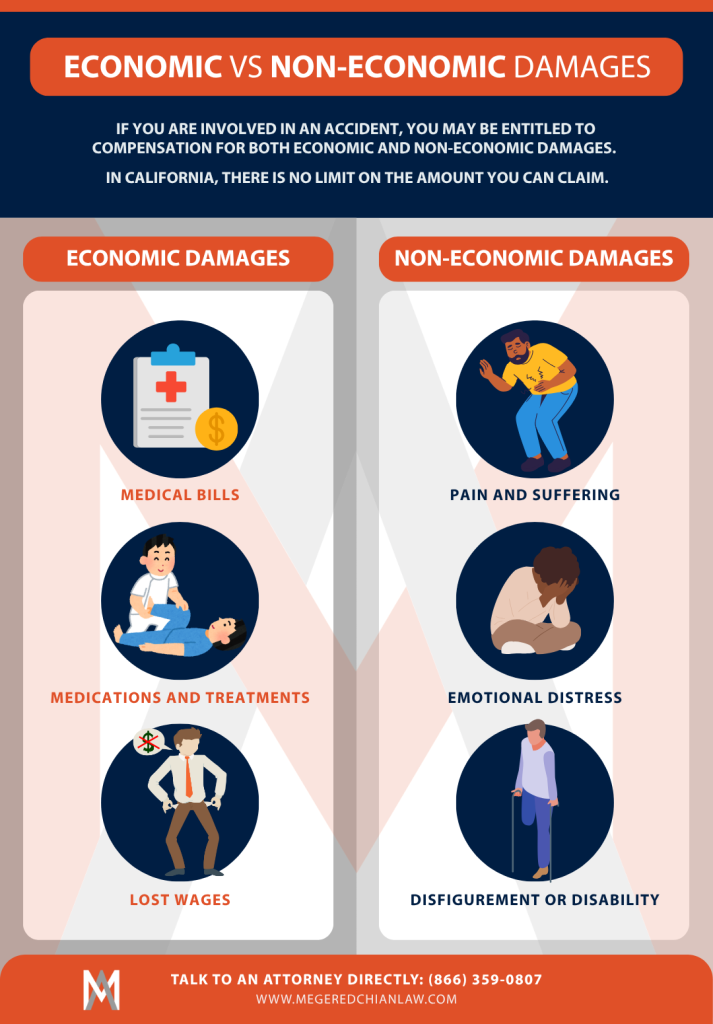
- Non-economic damages: Pain and suffering, emotional distress, and loss of enjoyment of life are all compensable in California, but they’re difficult to calculate and vary widely between cases.
Ultimately, the best way to understand your claim’s potential value is to consult a pedestrian accident attorney who can assess the specific facts of your case and help you build strong documentation of your damages.
Pedestrian Hit and Run: An Increasing Problem in California
If you’re familiar with Megeredchian Law’s website, you’ve probably seen our local accident news section, where we publish daily articles about traffic incidents throughout California. One of the most concerning trends we continue to report is the rise in hit-and-run accidents involving pedestrians and cyclists.
According to recent state data, pedestrian fatalities in California have been rising steadily over the past decade, with Los Angeles consistently ranking among the most dangerous cities for foot traffic. Hit-and-run incidents now account for a significant portion of these fatal or life-altering accidents.
Why Are These Cases Increasing?
Several factors contribute to this disturbing trend:
- Distracted driving, particularly involving smartphones and navigation systems
- Speeding, especially in residential or poorly lit areas
- Inadequate pedestrian infrastructure, including crosswalk visibility and sidewalk coverage
- Driver impairment due to alcohol or drugs
- Fear of legal consequences, leading some drivers to flee the scene instead of rendering aid
Despite California law requiring all drivers to stop after a collision—especially those involving injury or death—many still flee, leaving victims critically injured or deceased and their families without immediate answers or justice.
Why We Report These Cases
At Megeredchian Law, we publish these stories not just to document tragic events, but to raise public awareness, highlight recurring patterns, and encourage accountability. Each article we publish is part of our broader mission to support victims and their families through legal advocacy, and to help reduce the number of preventable deaths on California roads.
Here are some of the most recent hit-and-run cases we’ve covered:
- August 7, 2025 — West Los Angeles, CA – Francis Shim Identified as Pedestrian Killed in Wrong‑Way Hit‑and‑Run
- August 6, 2025 — Pacoima, Los Angeles, CA – Gloria Vasquez Identified as Victim in Fatal Hit‑and‑Run in Pacoima
- July 16, 2025 — Los Angeles County, CA – Edgar Cumplido Identified as Bicyclist Killed in Hit‑and‑Run Accident
- July 11, 2025 — West Hollywood, Los Angeles County, CA – Bicyclist Dies in West Hollywood Hit‑and‑Run Accident
- July 1, 2025 — Hollywood, CA – Erika Edwards ID’d as Victim in Hollywood Hit‑and‑Run
These are just a few among dozens of cases we’ve reported in recent months—a pattern that demands both legal response and community attention.
How to Receive Compensation From a Hit and Run as a Pedestrian
If you’re a pedestrian injured in a hit-and-run accident in California, you may still be able to recover compensation—even if the driver is never identified. California law provides several avenues for financial recovery depending on the circumstances of the case.
Here are the main options available to you:
Uninsured/Underinsured Motorist (UM/UIM) Coverage
If the driver who hit you cannot be identified—or if they’re known but don’t have insurance—you can file a claim under your own UM/UIM coverage. This benefit is part of your auto insurance policy, and it applies even if you were walking at the time of the crash.
UM/UIM coverage helps pay for:
- Medical expenses
- Lost wages
- Pain and suffering
- Other damages resulting from the accident
Note: Insurers typically require you to report the accident promptly, so do not delay filing a claim. Check your policy for specific deadlines.
California Victim Compensation Board (CalVCB)
If the hit-and-run driver is never located, you may be eligible for financial assistance through the California Victim Compensation Board.
CalVCB offers compensation to victims of violent crimes, including hit-and-runs, and may help cover:
- Medical bills
- Mental health treatment
- Income loss
- Funeral and burial expenses (if fatal)
To qualify, you must:
- File a police report
- Cooperate with law enforcement
- Submit an application to CalVCB
- Apply within 3 years of the crime (with some exceptions for minors or delayed discovery)
Other Sources of Compensation
- Medical Payments Coverage (MedPay): If you carry MedPay as part of your auto insurance policy, it can cover a portion of your medical bills—regardless of fault.
Accident Investigation: A pedestrian accident attorney can help you gather surveillance footage, witness statements, and physical evidence to assist in identifying the driver—or other potentially liable parties such as municipalities or property owners who contributed to unsafe conditions.
What are the Main Causes of Pedestrian Accidents?
If you’re asking “why do pedestrian accidents happen?” In California, the answer involves a combination of driver behavior, pedestrian mistakes, and environmental conditions. We already covered several key causes of hit-and-run pedestrian accidents, including:
- Distracted driving (especially involving phones or GPS)
- Speeding in residential or low-visibility areas
- Driver impairment from alcohol or drugs
- Poor pedestrian infrastructure (lack of crosswalks, lighting, or sidewalks)
- Drivers fleeing the scene out of fear of legal consequences
While those remain some of the most common and dangerous factors, they’re not the only reasons pedestrian accidents occur. Some additional causes are:
Where do Most Pedestrian Accidents Occur in California?
If you’re wondering where pedestrian accidents most often happen in California, the answer is overwhelmingly clear: urban environments, particularly in high-traffic counties like Los Angeles, San Diego, and San Francisco. According to statewide data and city traffic reports as of 2025, the majority of pedestrian collisions occur in locations with dense populations, complex intersections, and heavy vehicle flow.
Here are the most common types of locations where pedestrian accidents occur:
Urban Intersections
A significant number of pedestrian accidents happen at intersections, especially those with poor visibility, complex turn patterns, or inconsistent signage. This includes both marked and unmarked crosswalks. Failure to yield, distracted driving, and red-light running are frequent contributors.
Downtown and High-Density Zones
Busy downtown areas—such as Downtown Los Angeles, Downtown San Diego, and Downtown Oakland—see high pedestrian activity and vehicle congestion. These conditions increase the risk of collisions, particularly during peak traffic hours and weekend nights.
Tourist Districts
Areas like Hollywood Boulevard, Santa Monica Pier, and Union Square in San Francisco are known for high foot traffic, distracted pedestrians, and frequent vehicle congestion. Special events and nightlife increase the risk, especially during evenings.
Freeway On/Off Ramps and Arterial Roads
Many serious pedestrian accidents occur near freeway entrances and exits, where vehicles are accelerating or decelerating and drivers may not expect foot traffic. Arterial roads like Figueroa Street, Olympic Boulevard, and Sunset Boulevard in Los Angeles are frequent sites of collisions due to multiple lanes, high speeds, and inconsistent pedestrian crossings.
Public Transit Stops and Bus Corridors
Areas around bus stops, light rail stations, and crosswalks near transit hubs are high-risk due to unpredictable pedestrian movement and impatient drivers trying to maneuver around stopped buses or trains.
School Zones and Parking Lots
Although not the most fatal, a significant number of low-speed pedestrian injuries occur in school zones, parking lots, and driveways—often involving children or elderly pedestrians.
Top 10 Most Dangerous Cities for Pedestrians in California
Los Angeles continues to lead the state in pedestrian accidents. According to 2024 data, over 1,300 pedestrian accidents were reported in the county—more than any other region. Dangerous intersections include:
- Hollywood Blvd & Highland Ave
- Figueroa St & Olympic Blvd
- Alameda St & Cesar Chavez Ave
- Sunset Blvd & Alvarado St
Local governments and traffic safety agencies are working to implement more pedestrian-focused infrastructure, such as protected crossings, speed bumps, pedestrian-only zones, and better signal timing.
The list also includes the following cities:
- Bakersfield
- Stockton
- Fresno
- Riverside
- Sacramento
- San Diego
- San Jose
- San Francisco
- Oxnard
What to Do After a Pedestrian Accident
Who is at Fault When a Car Hits a Pedestrian?
In California, determining fault in a pedestrian accident requires identifying every party whose actions contributed to the collision. This is important because you typically have only one opportunity to secure full compensation for your injuries, lost income, and other damages.
California follows a fault-based system, meaning the injured pedestrian seeks compensation from the person or entity responsible for causing the accident. In many cases, the driver is primarily at fault—but other parties may share legal responsibility.
Potential At-Fault Parties
- Driver of the Vehicle
The driver may be liable if they were speeding, distracted, failed to yield the right-of-way, ran a red light, or drove under the influence. Their auto insurance is typically the first source of compensation.
- Driver’s Employer
If the driver was working at the time—such as operating a delivery truck, rideshare vehicle, or company car—their employer may be held vicariously liable for the employee’s negligence.
- Public Entities (Government Liability)
- Hazardous Road Conditions: A city, county, or state agency may be responsible if defective sidewalks, broken streetlights, missing signs, or dangerous crosswalks contributed to the accident.
- Dangerous Intersections: If a location was known to be hazardous and the agency failed to take corrective action, liability may apply.
- Government-Owned Vehicles: If the at-fault driver was operating a government vehicle, that agency could be held accountable.
- Construction Companies and Other Third Parties
If a work zone, improperly placed barriers, or poor traffic control created unsafe conditions for pedestrians, the company responsible for the site may share liability.
How Liability is Proven
Establishing fault often requires:
- Police reports
- Witness statements
- Accident scene photographs and video
- Vehicle data and surveillance footage
- Expert analysis of roadway design or vehicle operation
Can You Claim Compensation if:
The Pedestrian Was Partially At Fault
Yes. In California, you can still claim compensation for a pedestrian accident even if you were partially at fault. The state follows a pure comparative negligence rule, which means your compensation is reduced by your percentage of fault. For example, if you were found 30% responsible because you crossed outside a designated crosswalk, you could still recover 70% of your damages from the other party.
The Pedestrian is an Undocumented Immigrant / Can’t Speak English
Yes. In California, your immigration status cannot be used against you in a civil lawsuit, including a pedestrian injury case. It is legally irrelevant to your right to compensation. If the victim does not speak English well enough to participate in legal proceedings, licensed interpreters can be provided in your specific language and dialect. While some opposing parties may attempt intimidation tactics, an experienced pedestrian accident attorney can object, file motions, and take all necessary steps to stop such conduct.
The Pedestrian Dies in the Accident
Yes. If a pedestrian dies from their injuries, their surviving family members or estate may file a wrongful death claim under California law. This type of lawsuit seeks compensation for funeral and burial expenses, loss of financial support, and loss of companionship, as well as other damages. The claim is typically brought by a spouse, domestic partner, children, or other qualifying relatives.
Useful Resources for Pedestrian Struck in California
Emergency and Medical Resources
911 / Emergency Medical Services
- Dial 911 immediately after the accident for urgent injuries.
- Request police report and medical attention.
Trauma Hospitals & Low Income Clinics
Reporting and Legal Documentation
California Highway Patrol (CHP) – Traffic Incident Report
Local Police Departments
DMV SR-1 Accident Report
Must be filed within 10 days if injury, death, or damage > $1,000 occurred. Report the incident here.
Hire the Best Pedestrian Accident Attorneys for Your Claim
Hiring an experienced, skilled pedestrian accident lawyer in California can make or break your claim. Don’t miss the chance to obtain maximum compensation. Call Megeredchian Law at (866) 359-0807 to schedule a free consultation. We can evaluate your case in just a few minutes. If you qualify, you’ll be assigned a local California pedestrian accident attorney. Speak with them directly, work with the best, and pursue compensation that covers all the damages you sustained.


 Call Us: